Knowledge Base · Pricing & Discounts
Applies to: Connected 12.0+ | Platform: macOS, Windows, Connected on Demand
ARTICLE CONTENTS
- Overview
- Activating the Price Matrix
- Setting Up a Price Matrix for a Single Item
- Recalculating the Price Matrix for Multiple Items
- Related Articles
- Reference Links
1. Overview
The pricing matrix allows up to seven different levels. Each level can be assigned to a single customer or group of customers, with Level 1 being the default and typically the list price. Each pricing level also supports five different quantity breaks for further price discounts.
When entering an order or invoice, Connected automatically displays the price of the items being invoiced according to the price level assigned to the customer.
2. Activating the Price Matrix
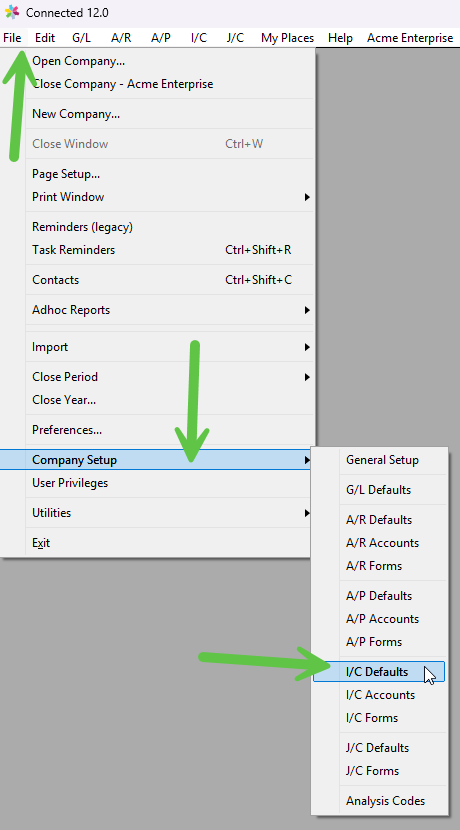
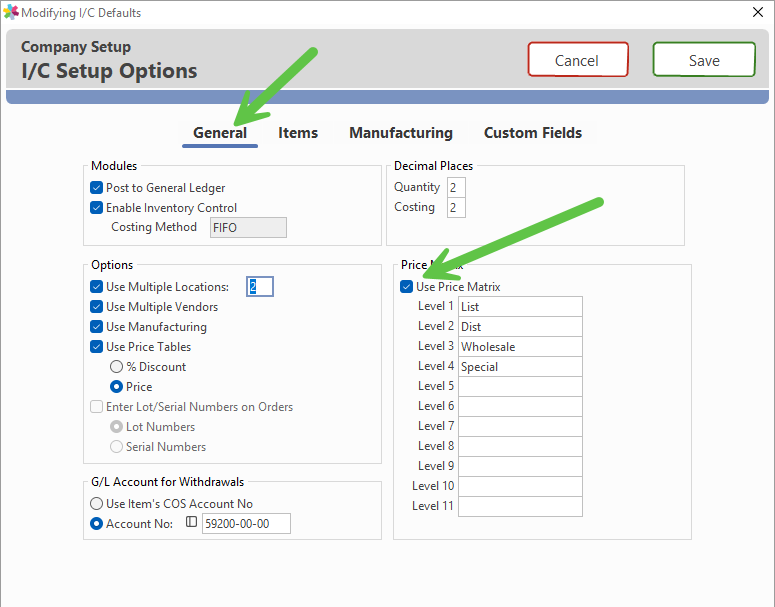
Enable the feature by selecting the Use Price Matrix option in the I/C Default setup window.
3. Setting Up a Price Matrix for a Single Item
- Locate the item using the Find command or the Inventory Query window.
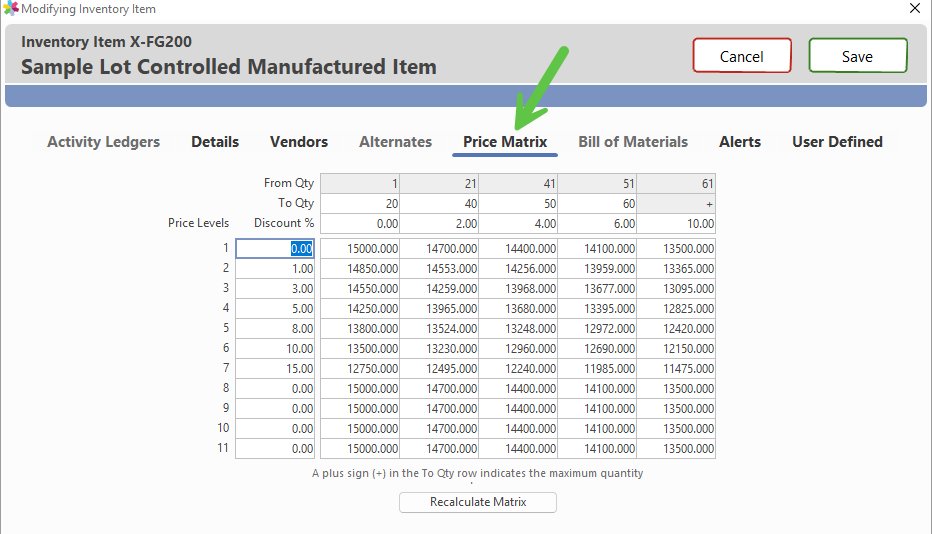
- Select the Price Matrix tab and click Modify.
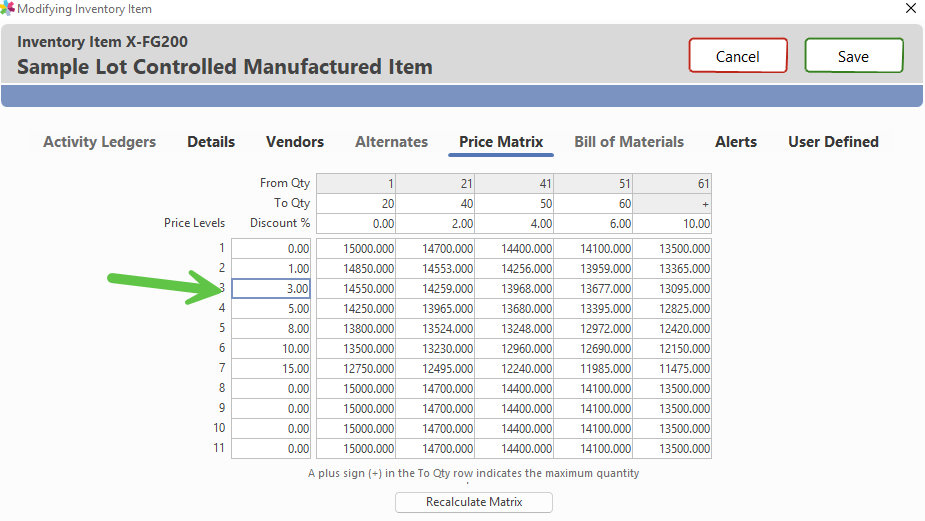
- Enter discount percentages for each price level (1–7). Price Level 1 usually has a zero percent discount, since it is the normal selling price (aka List Price).
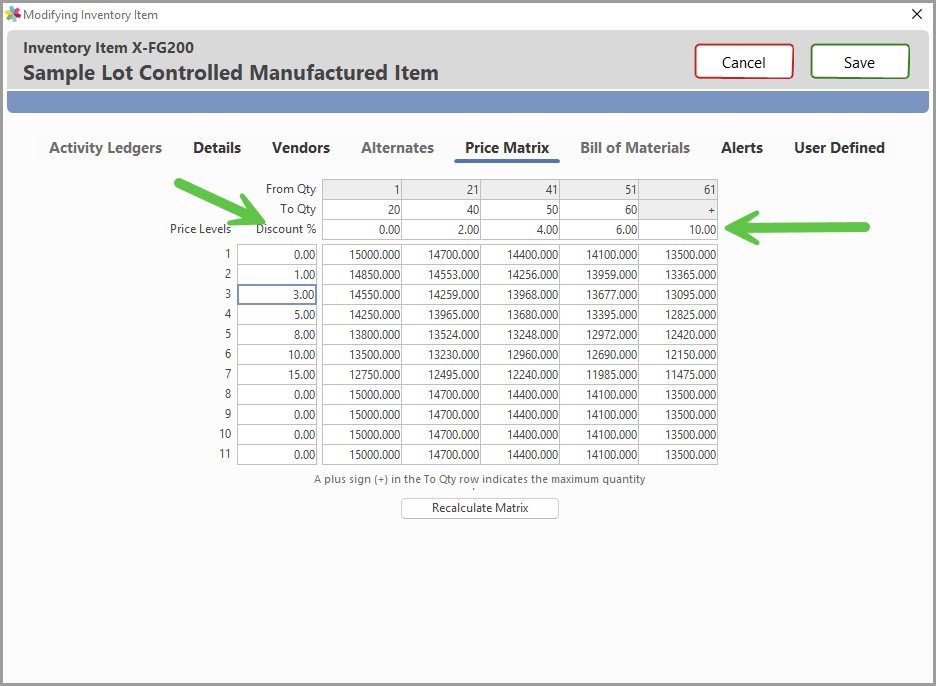
- Enter discount percentages for the quantity breaks at the top of the window.
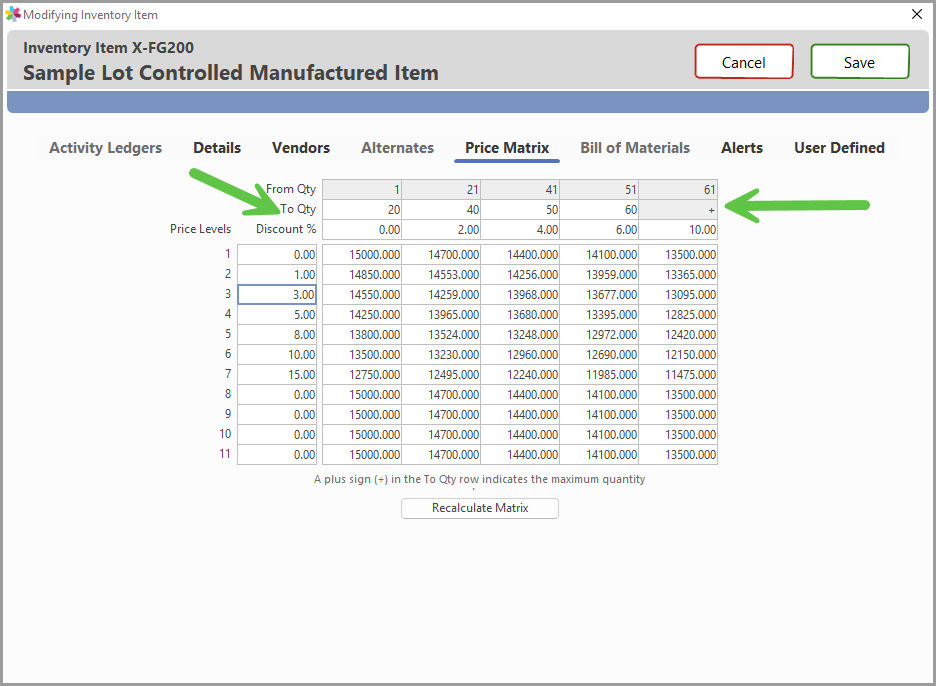
- Enter the quantity ranges in the From Qty and To Qtyfields. After a number is entered in the To field, the same number plus one automatically appears in the next From field.
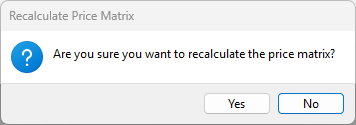
- Click Recalculate Matrixto generate all price calculations.
TIP
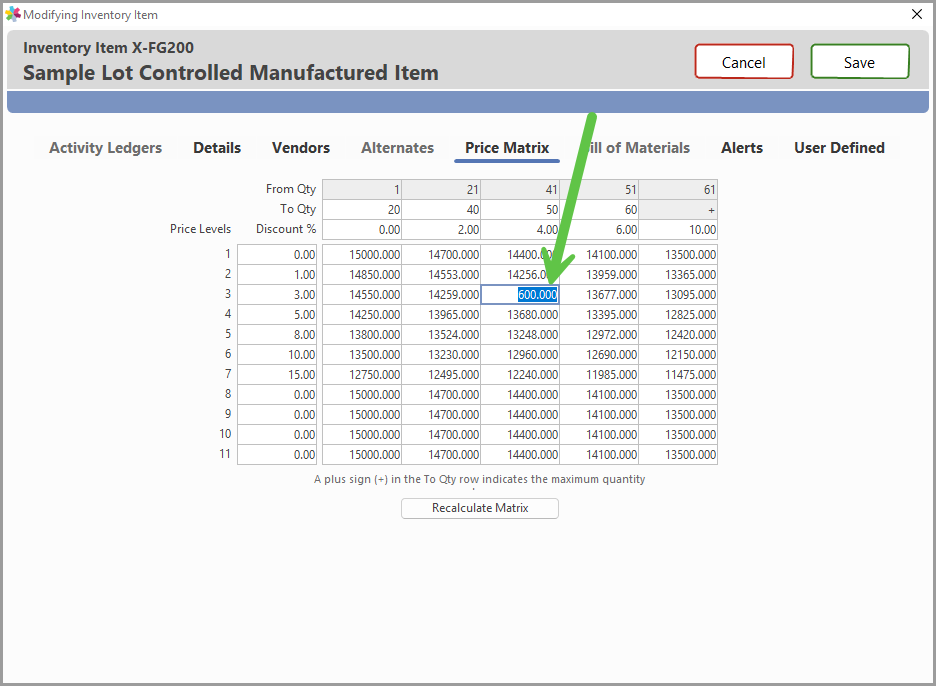
A price can also be entered directly into any sell price, without using the recalculation.
- Press ENTER or click the checkmark icon to save.
4. Recalculating the Price Matrix for Multiple Items
Bulk recalculation allows price adjustments to be applied across a group of items at once. For example, if the cost of parts purchased from a specific vendor increased by 5%, a 5% price increase can be applied to all of those parts in a single pass.
WARNING Create a backup before performing bulk price changes. See How to Manually Back Up a Connected on Demand Data File or Creating a Backup Using the ODBA Application. |
- Select Recalculate Price Matrixfrom the Connected Desktop window or the I/C menu.
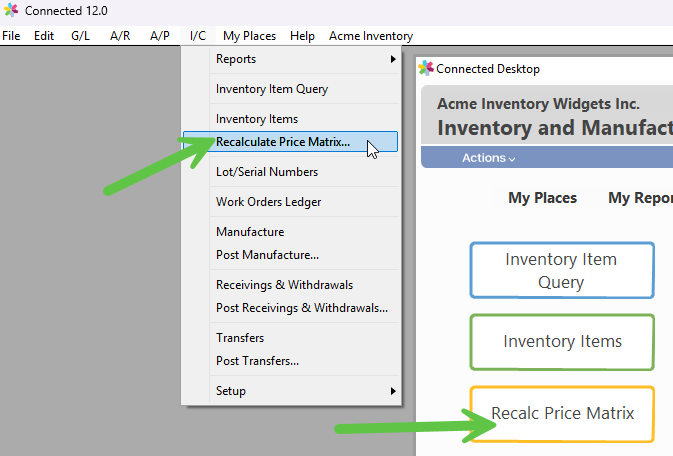
- The Price Matrix Recalculation window opens.
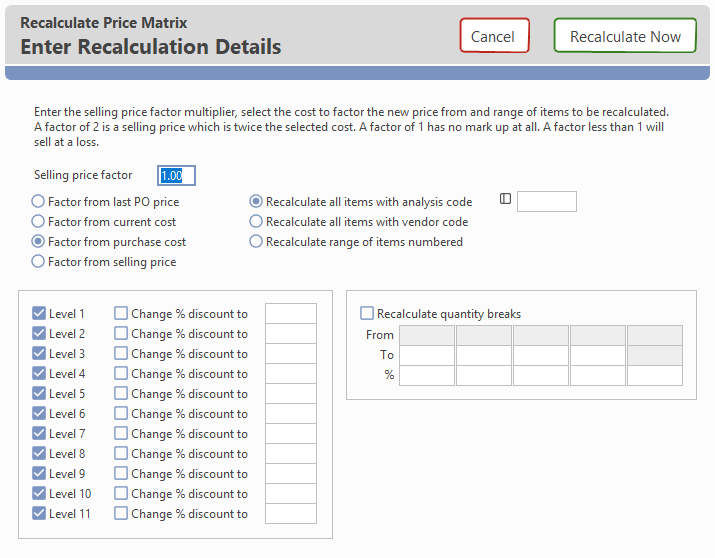
- Enter a Selling Price Factor. A value greater than 1 increases prices, a value less than 1 reduces prices, and a value of 1 makes no change.
- Select what the price should be Factored From: Last PO Price, Current Cost, Purchase Cost, or Selling Price. The default selection is Purchase Cost; in most cases, the factor used for a price increase is Selling Price.
- Enter Item Selection criteria: Items with Analysis Code, Items with Vendors Code, or Item Range.
- Choose which pricing levels to modify using the checkboxes.
- Enter a Change % Discount, if applicable.
- Select the Recalculate Quantity Breakscheckbox if needed, and enter the quantity adjustments.
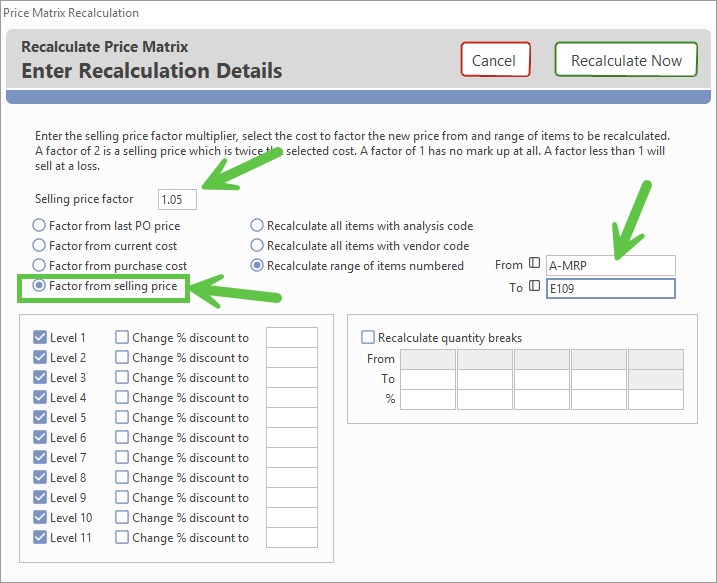
- Click Proceed with Recalculation or press ENTER.
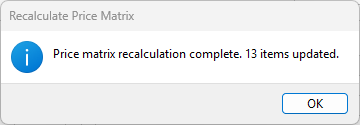
- A completion message displays.
5. Related Articles
- Intro to Custom Inventory Pricing and Discounts
- Pricing and Discount User Privileges
- Sales Discount Options for Accounts Receivable
- Custom Price Table
- Handling Unexpected Inventory Cost Increases
6. Reference Links
Was this article helpful?
That’s Great!
Thank you for your feedback
Sorry! We couldn't be helpful
Thank you for your feedback
Feedback sent
We appreciate your effort and will try to fix the article