Surcharge System Requirements:
-Connected Version 11.0 or greater, Connected 12.0 or greater to include Sales Order support
-Connected Inventory Control Enabled (Connected Enterprise only)
CONTENTS
Introduction
Surcharges can be used for multiple purposes. For example, a percentage surcharge can be applied to a customer invoice for additional fuel costs or to pass on payment processing fees for credit cards. Surcharges are also common when a contract price has been agreed to and unforeseen external factors, such as freight/labor costs, cause declining margins during the contract duration.
Connected can apply surcharges to customer invoices and credit memos. Customers and/or specific inventory items can be omitted from surcharge application. Surcharges can apply a custom label on screen and on printed invoice forms.
Surcharge Activation and Setup
There are five areas in Connected that need to be configured to utilize surcharges.
1) Enable in the A/R Defaults Setup Window.
2) Create and/or assign a new General Ledger account for surcharge revenue in the A/R Accounts screen.
3) Select Customers that the surcharge will apply to.
4) Select Items that the surcharge will apply to.
5) Enable sales taxes on the service charge, if applicable.
6) Update printed invoice form(s) to add the new field and labels.
Activating Surcharges in the A/R Defaults
NOTE: Before activating surcharges, ensure that all invoices are posted. Additional invoicing should not be completed until all setup is completed.
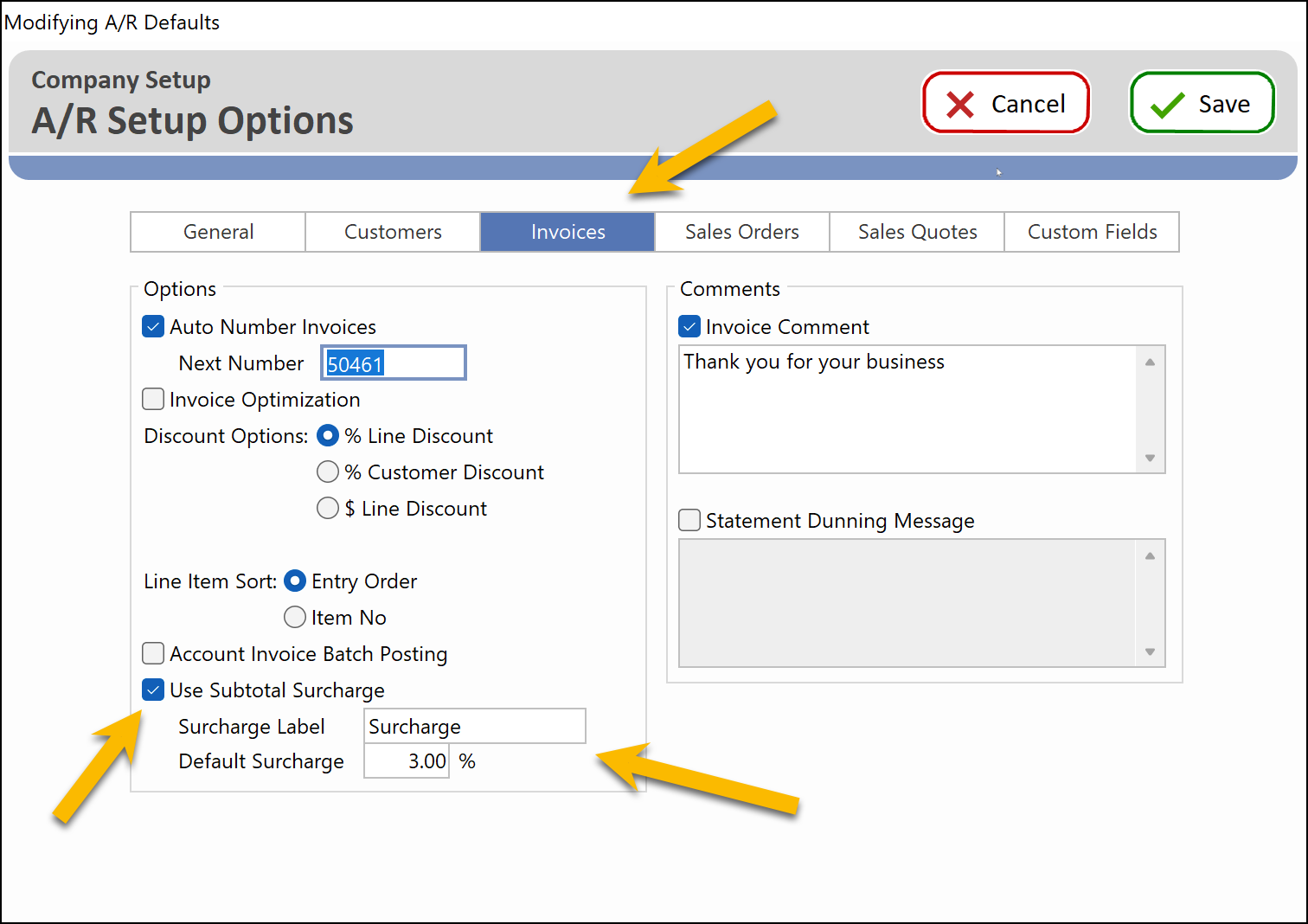
3) Select the "Use Subtotal Surcharge" checkbox and add a Surcharge Label and Default Surcharge %, as shown in the following screen.
Surcharge Default Revenue G/L Account
Once surcharges have been turned on, a default "Surcharge Revenue" general ledger account is required. Before this step, ensure a designated general ledger account has created. Reference: Adding a General Ledger Account
1) Select File -> Company Setup -> A/R Accounts.
2) Enter a value in the "Surcharge Revenue" field, as shown in the following screen.
3) Click Save to exit with the changes applied.
NOTE: Once surcharges are enabled, invoicing cannot be done until the Surcharge Revenue general ledger account is assigned.

Marking Surcharges as Taxable
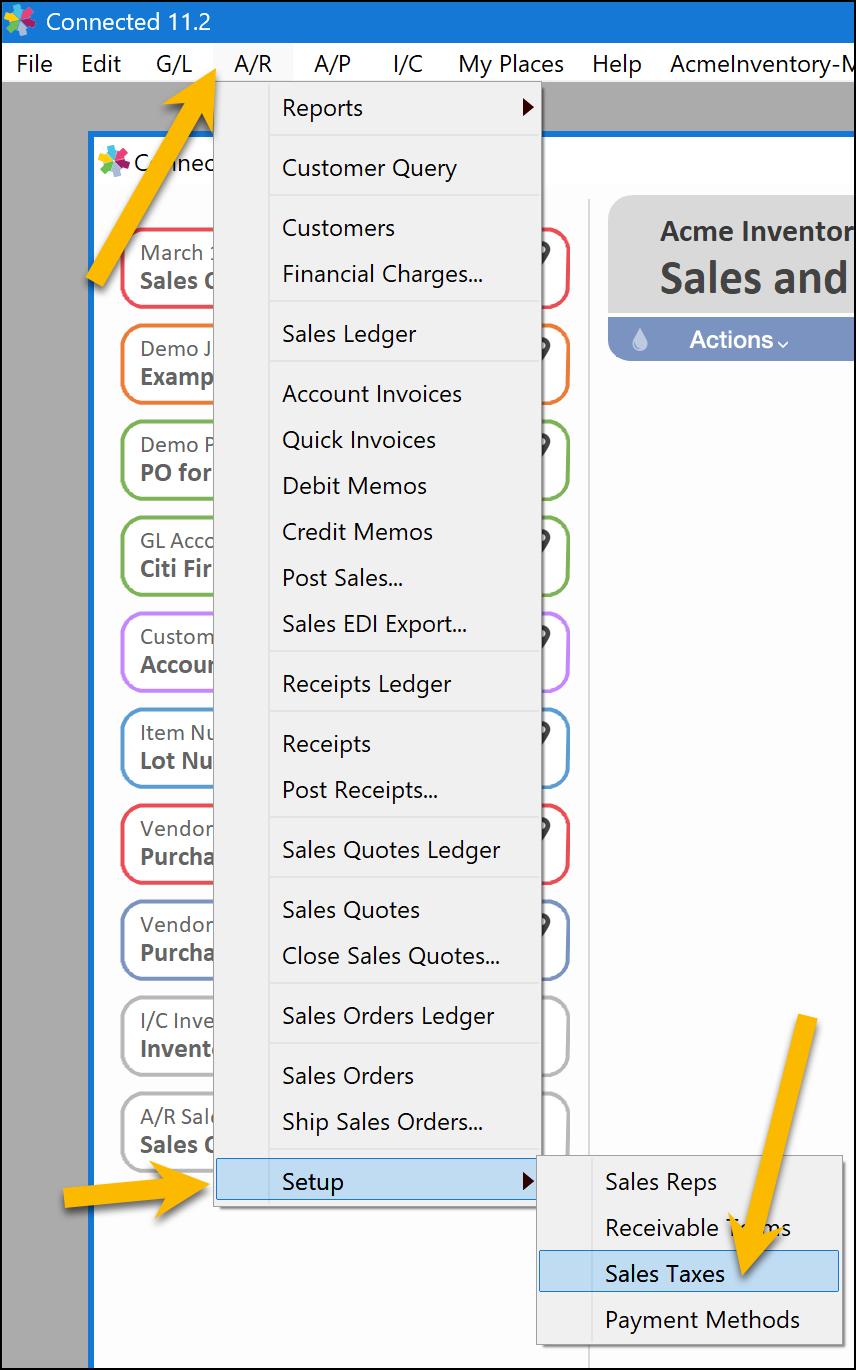
1) Select A/R -> Setup - Sales Taxes, as shown in the following screen.
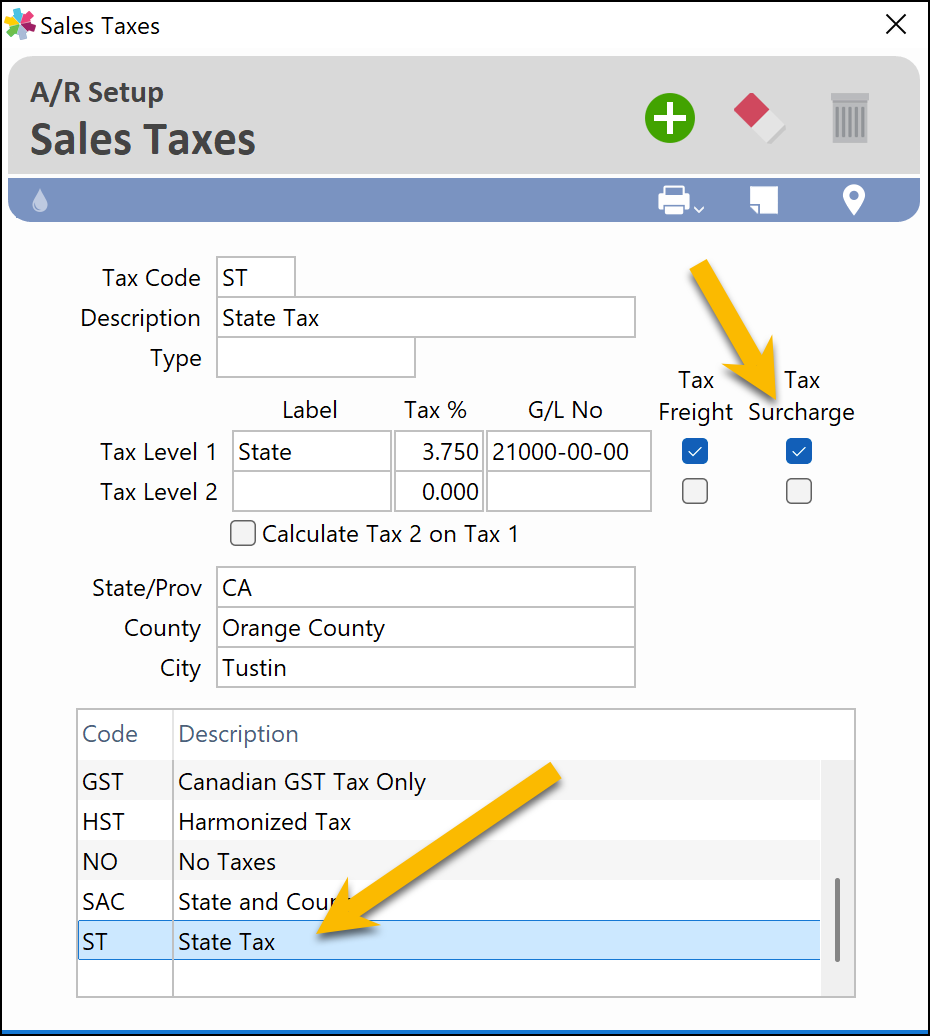
2) Click on a tax code in the list at the bottom of the window, and click Modify.
3) Select the "Tax Surcharge" checkbox, where applicable.
4) Click Save to confirm the changes and repeat for any other Sales Taxes as needed.
Selecting Customers for Surcharge
When surcharges are enabled all customers default to being omitted from charges. Each customer must first be selected to have surcharges apply.
The location of the "Invoice Surcharge" field in the Customers window, is shown in the following screen.

If large groups of customers need to be enabled or disabled for surcharges, please contact submit a ticket to request a utility for an import/update to check or uncheck the "Invoice Surcharge" field.
Excluding Specific Items from the Surcharge
When the Surcharges are turned on, all items default to having the Surcharge apply. Specific items can be disabled, so that an invoice can combines items with and without surcharges. For example, a service item or specific group of products may be omitted from surcharges.
To disable the surcharge:
1) Find an item in the Inventory Items screen or by drilling into a list from the Item Query window.
2) Click Modify and then check or uncheck the "Surcharge" checkbox.

Adding the Surcharge to the Invoice Layout (print/pdf version)
The following screen shows an example of how to add a form field and the related three fields for surcharges.
Reference: Customizing Forms for additional information on form edits.

Using Surcharges
Surcharges are assigned in the following ways:
-Adding an Account Invoice manually
-Shipping a Sales Order (invoice created will include a surcharge)
-Recurring Invoices (when invoice is created a surcharge is applied)
-Credit Memos (Adding manually or from Account Invoice window)
The surcharge field is located below the Subtotal of an invoice, before the Freight field.

The surcharge percentage can be modified up until the point when the invoice is posted.
NOTE: If the Surcharge label is changed after an invoice has been created, the previous label used at the time the invoice was created will be present
NOTE: The Invoice import does not support surcharge assignment at this time. (coming soon)
Surcharges Expanded
The surcharge feature can be used for a different application. For example, the overall calculation of a discount on an invoice. If a negative value is applied, the invoice will be reduced by the percentage specified vs increased.
Was this article helpful?
That’s Great!
Thank you for your feedback
Sorry! We couldn't be helpful
Thank you for your feedback
Feedback sent
We appreciate your effort and will try to fix the article